CHAPTER NINE
Life Without the Kids
1970s–1980s
One month turned into four months. Barbara had no intention of living in the jungle and set out to bring the kids home. She arrived in Costa Rica with a friend who spoke Spanish. Using the help of a police detective, Barbara eventually located the Finca without an address. It took three days to find using a letter from Giovanna. After showing photos of the children around town, Barbara met the local priest, who remembered the kids with the blonde and red hair. He recalled that they had been traveling toward Dominical.
It was a very emotional departure when the children left the finca and Costa Rica. Jim carried the hope that the kids would be allowed to visit again one day, but Barbara cut off all communication. Jim’s sister Lee would sometimes send a letter or a holiday card sharing news about the kids, if she heard of any.
Agricultural life on the finca dominated daily routines. The passing of time was measured by the seasons. Nature was in control. Torrential rains often caused large mudslides that blocked the road. Walking or horseback riding became the only means of transportation until the road was cleared, which could take from a few days to a week or more.
The following year, a letter from Jim’s sister, Lee, arrived at the post office in San Isidro. She reported that their mother had been found deceased on the front porch of her home. The Florida heat and humidity had not been kind to her body during that time. The coroner speculated that she had been departed for at least three days. For Jim, this brought a measure of closure to a very difficult chapter of his life.
After the passing of Jim's mother, he received a fifty-dollar monthly check from his sister Lee from the sale of their mother's home. Otherwise, all of his livelihood came from the hard, ironrich red clay soil and the abundant rainfall. Jim realized that living without money was possible. Mook the monkey and a talking parrot had joined the finca , providing endless entertainment for everyone. Life was relaxed, and Jim’s desire for manufacturing clothing had long since ended.
Traveling to San Isidro or San José required careful planning. The Land Rover was no longer operational, as replacement parts were too costly. Alternative modes of transportation became essential. Finca Avabacu was seven miles from the river crossing at Dominical. It was important to know the tide schedule before leaving, as crossing the river even by truck was impossible.
If the river was at medium tide, a local rancher might, with luck, provide a ride across. During the rainy season, there was a man with a boat known as El Paso del Bote who ferried people across the river as long as the water was not too rough. Otherwise, it was a mile walk to the suspension bridge, which swayed noticeably while walking across. Small cars could also cross this precarious bridge.
Once on the north side of the river, it was another mile's walk to catch the local bus into town. The bus came once in the morning and returned in the late afternoon. During the rainy season, with muddy conditions, the bus would stop further away from the muddy town road, requiring an additional mile-long walk.
Dominical, located on the north side of the river, consisted of a few bungalows adjacent to the Mira Mar beachside eatery, which also carried a limited selection of basic supplies. Having a friend in town was always better than staying at the bungalows.
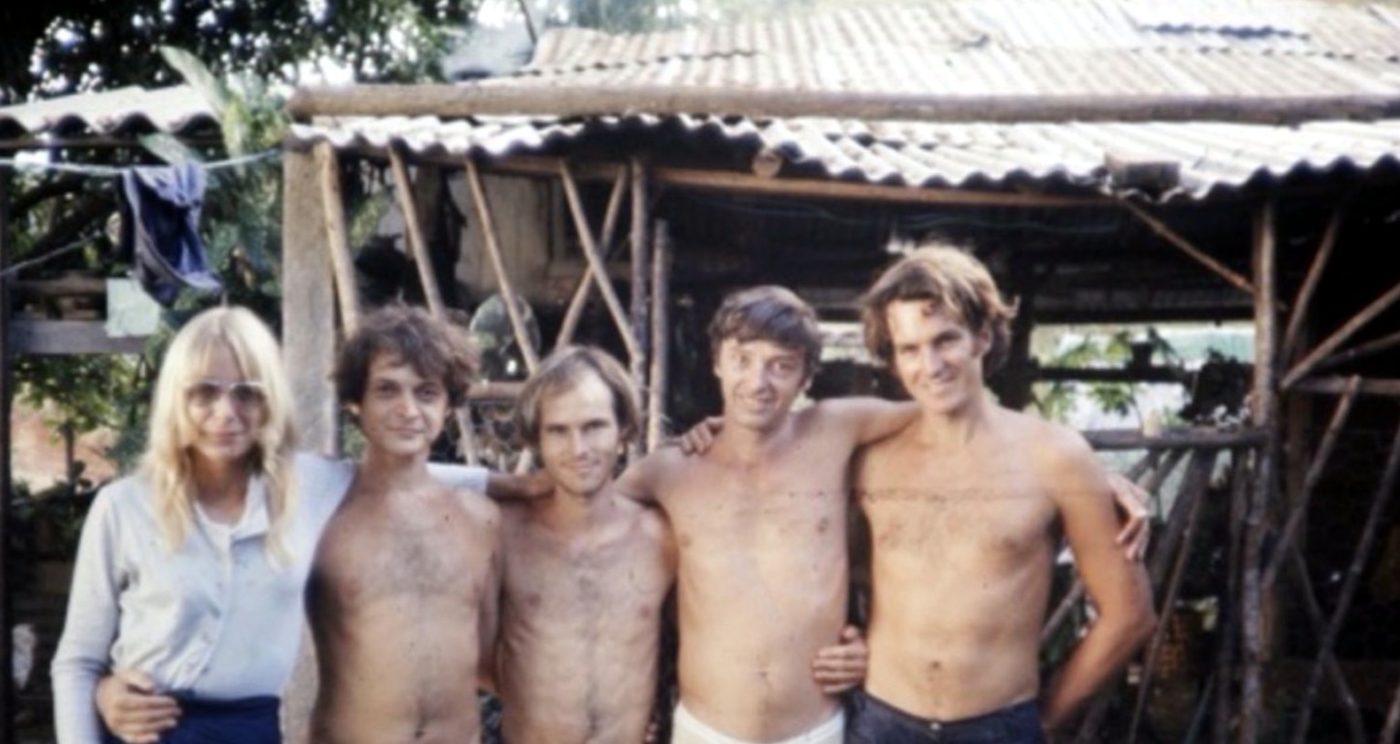
One such friend was Karima, who had also moved from Los Angeles to Dominical in the mid-1970s, and had built a swamp house on stilts on the south side of the river. Sometimes Karima visited the finca with her daughter and partner.
A few times, when Jim returned from San Isidro by bus, he showed up at Karima’s, barefoot, carrying his boots after crossing the waist high river, muddy and soaked from the long walk through rain. In this rural life, there were no telephones to call ahead, friends just simply showed up.
On those occasions, Karima would feed Jim, and they would spend hours discussing life, gardens, philosophy, artistry, and the fact that they were both Pisces. The soundtrack was always a loud symphony of crickets and bullfrogs. She often let Jim sleep on her couch before he made the nearly seven-mile walk back to Finca Avabacu .
The rural life was not easy. By the 80s, most of the original coowners had drifted back to city life. For Jim, as much as he was emotionally connected with the finca , there was a part of his life that the jungle could not provide.
Ellen Serber, from Inverness, California, visited the farm on the invitation of a friend. Jim and Ellen formed an immediate and powerful connection, and she remained on the finca for a month. Afterward, they continued corresponding for more than a year.
As Jim's relationship with Ellen deepened, so did his desire to see his children again, and he felt increasingly drawn back to California. By then, he was the sole owner of the finca .
Ten years had passed. Jim, now forty-eight, would have to sell the finca if he wanted to return. It was a difficult decision. What if his children rejected him after all the years that had passed? There was no way to know how his return would unfold.